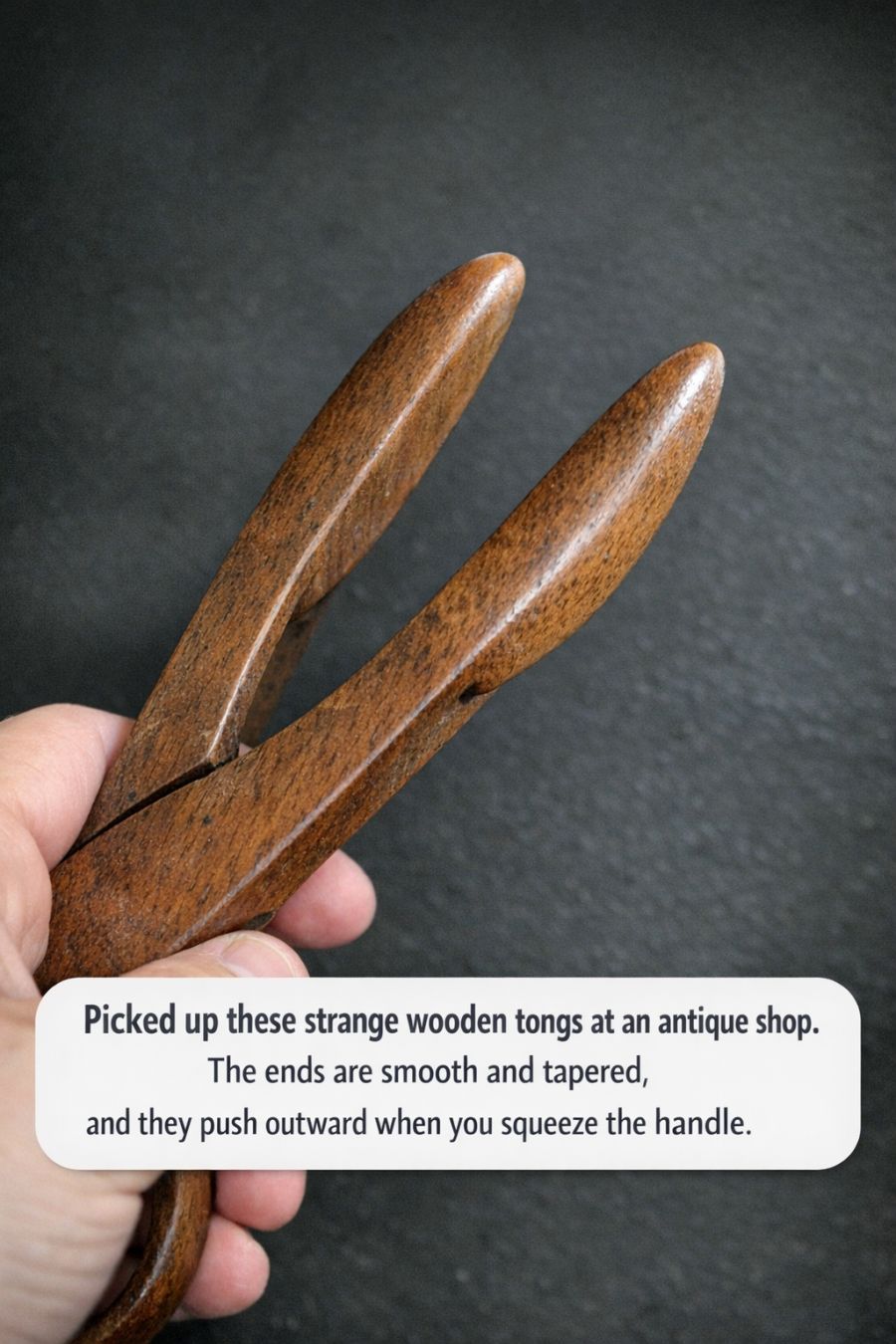
Antique shops are treasure troves of history, each item with its own story waiting to be unveiled. Among the myriad of curiosities, one may sometimes stumble upon objects that defy immediate identification. Such was the case when I picked up a pair of strange wooden tongs at a quaint antique shop nestled in the heart of the city. With their smooth, tapered ends and a peculiar mechanism that pushed outward when squeezed, these tongs piqued my curiosity.
As I delved deeper into the mystery of these tongs, I embarked on a journey through time, uncovering not just the identity of the object itself, but also the rich tapestry of the era it harked back to. What seemed initially to be an enigma soon revealed itself as a fascinating artifact from a bygone era, illuminating the daily lives and social customs of those who lived over a century ago.
1. A Curious Find: The Mystery Of The Wooden Tongs
Upon first glance, the wooden tongs appeared simple yet enigmatic. Measuring approximately 8 inches in length, they were crafted from a fine-grained wood, possibly mahogany, known for its durability and smooth finish. The ends were elegantly tapered, each about half an inch wide at the tip, allowing for a precise and gentle grip.
The mechanism was intriguing – squeezing the handle caused the ends to push outward, a movement that seemed intentional and purposeful. This unique functionality hinted at a specific use, inviting speculation and research into its origins. While at first, I considered the possibility of it being a kitchen tool, the design and craftsmanship suggested otherwise, pointing towards a more refined and specialized application.
2. Key Clues: Smooth Tapered Ends And Outward Push
The smooth, tapered ends of the tongs were a key feature, designed for delicacy and care. This was not a tool meant for rough or heavy use. Instead, it suggested a function that required precision and a gentle touch. The outward push mechanism was another clue, indicating that the tool was meant to be inserted into something that needed to be expanded or opened slightly.
Each of these characteristics served as pieces of a puzzle that, when put together, hinted at a particular historical function. The craftsmanship and design were indicative of a tool that was not only functional but also a product of its time, reflecting the technological and social advancements of the era it was created in.
3. From Fashion To Function: The Era Of Elaborate Gloves
The late 19th and early 20th centuries were a time when fashion was not merely about aesthetics but also a statement of social status and identity. Gloves, in particular, were an essential part of a well-dressed individual's wardrobe, especially for women. They were crafted from fine materials such as kid leather, silk, and lace, requiring careful handling and maintenance.
The elaborate designs and delicate materials of these gloves necessitated tools that could assist in their care and preservation. This was the era that gave rise to specialized tools like glove stretchers, which helped maintain the shape and fit of gloves, ensuring they remained as elegant as the day they were purchased.
4. What Is A Glove Stretcher And How Does It Work?
A glove stretcher is a tool designed specifically for the purpose of maintaining the shape and fit of gloves. The smooth, tapered ends of the wooden tongs are inserted into the fingers of a glove, and when the handle is squeezed, the ends push outward. This action gently stretches the glove, smoothing out wrinkles and helping to restore its original shape.
The design of the glove stretcher allows it to be used with gloves of various sizes, as the amount of pressure and the extent of the stretching can be easily controlled by the user. This ensures that the glove is not overstretched, which could damage delicate materials such as fine leather or silk.
5. Why The Arms Open When You Squeeze The Handle
The mechanism of the glove stretcher is both simple and effective. When the handle is squeezed, a pivot point near the base of the tongs causes the arms to open, pushing the ends outward. This mechanical action is achieved through a basic lever system, which amplifies the force applied to the handle, allowing for precise control over the stretching process.
This design not only makes the tool easy to use but also ensures that the stretching is done evenly, preventing any distortion of the glove's shape. The ability to apply a gentle and controlled force is crucial, especially when dealing with fragile and expensive materials.
6. Materials, Shapes, And Sizes Collectors Should Recognize
Collectors of antique glove stretchers should be aware of the various materials and styles that these tools come in. While wood is a common material, metal glove stretchers, often made of brass or steel, can also be found. Each material offers its own advantages; wood is gentle and less likely to damage the glove, while metal provides durability.
The shape and size of glove stretchers can vary as well. Some are designed with intricate carvings or embellishments, reflecting the artistry and attention to detail of their makers. Others are simpler in design, focusing purely on function. Recognizing these variations can help collectors identify the age and origin of a glove stretcher, adding to its historical value.
7. How Victorian Households Used Glove Stretchers Daily
In Victorian households, glove stretchers were a common tool, used regularly to maintain the appearance and fit of gloves. With gloves being a staple of fashion and etiquette, keeping them in pristine condition was important. The daily routine often included cleaning and stretching gloves after wear, ensuring they looked as elegant as when they were first worn.
These tools were not just utilitarian but also a reflection of the societal values of the time, where appearance and presentation were of utmost importance. The regular use of glove stretchers in households underscores the significance of gloves in the fashion of the era and the lengths to which people went to preserve their wardrobe.
8. Telltale Signs Yours Is A Genuine Antique
Identifying a genuine antique glove stretcher involves examining several key features. The craftsmanship is a primary indicator; antique stretchers often exhibit fine workmanship, with smooth finishes and well-crafted mechanisms. Signs of wear and patina can also suggest age, as these tools were used frequently.
Another clue is the presence of maker's marks or engravings, which can provide information about the origin and age of the stretcher. Collectors should also be aware of the design styles that were prevalent during different periods, as these can help authenticate the piece and place it within a specific historical context.
9. Common Misidentifications: Not Salad Tongs Or Sugar Nips
Glove stretchers can sometimes be mistaken for other types of tongs, such as salad tongs or sugar nips, due to their similar appearance. However, there are distinct differences that set them apart. Unlike salad tongs, glove stretchers have a mechanism that allows the arms to open outward, and they are typically more slender and longer.
Sugar nips, on the other hand, are designed for a pinching action and do not have the same outward push mechanism. Understanding these differences is crucial for properly identifying glove stretchers and appreciating their unique function and design.
10. Displaying, Preserving, And Safely Using Old Stretchers
Antique glove stretchers can be both a collectible item and a functional tool. When displaying them, it's important to protect them from excess moisture and direct sunlight, which can damage the wood or metal. A glass display case or a dedicated spot in a curio cabinet can be ideal for showcasing these pieces.
For those who wish to use antique glove stretchers, care must be taken to ensure they are in good condition. Regular maintenance, such as oiling wooden stretchers or polishing metal ones, can help preserve their functionality and appearance. It's also advisable to handle them gently, as the mechanisms can become fragile over time.
11. What Your Antique Glove Stretcher Reveals About Its Past Owner
An antique glove stretcher is more than just a tool; it's a window into the past lives of its owners. The presence of a glove stretcher in a household suggests a commitment to fashion and an adherence to the social norms of the time. It reflects a lifestyle where attention to detail and presentation was highly valued.
The condition and style of the glove stretcher can also provide insights into the level of care and pride the owner took in their possessions. A well-preserved stretcher with intricate designs might indicate a household of means and taste, where such tools were not just practical but also a statement of elegance and refinement.



.jpg)


0 commentaires:
Enregistrer un commentaire