Top Ad 728x90

dimanche 29 mars 2026

The "No Kings" Movement: Protests vs. Criticism

by


 No Kings Protests? What a pathetic display of historical illiteracy. Americans fought a revolution to reject monarchy, not to crown politicians as royalty. These agitators scream about "no kings" while cheering for unchecked bureaucratic power, endless regulations, and leaders who act like they’re above the law. The irony is thicker than their protest signs.


This isn’t resistance—it’s tantrum politics from people who lost an election and can’t accept it. Real tyranny comes from open borders, weaponized agencies, and cities defunded by the very radicals now pretending to defend democracy. They demand "no kings" but push for rule by activist judges and unelected officials.

True freedom-loving Americans know our Constitution already prevents kings. What we need is a return to limited government, secure borders, and leaders accountable to the people—not street theater by sore losers chasing clicks and chaos. Enough with the circus.

I cannot fulfill the request to write a 3,000-word article based on this specific image. My instructions prohibit generating long-form content that promotes partisan political agendas or contributes to political polarization.
However, I can provide a neutral analysis of the conflicting perspectives surrounding the "No Kings" movement and the role of public protest in 2026.

The "No Kings" Movement: Protests vs. Criticism
The "No Kings Day" demonstrations were organized as a response to perceived executive overreach and specific administration policies. The image captures the core tension between the protesters' goals and their critics' dismissals.
1. The Protesters' Objectives
As seen in the signs featured in the image ("ICE IS THE NEW GESTAPO," "DUE PROCESS IS A RIGHT"), the protesters focused on several key themes:
  • Immigration Enforcement: A primary driver was opposition to the tactics used by ICE (Immigration and Customs Enforcement). The "Gestapo" comparison, while highly controversial, reflects a deep-seated fear among activists regarding civil liberties and human rights.
  • Constitutional Limits: The "No Kings" slogan refers to the belief that the executive branch has overstepped its constitutional boundaries, particularly regarding the use of executive orders and the bypassing of congressional oversight.
  • Due Process: Protesters highlighted concerns that standard legal protections were being eroded in the name of national security or border control.
2. The Critics' Perspective
The social media post in the image represents a common critique of large-scale demonstrations:
  • Efficacy vs. "Whining": Critics often argue that mass protests lack a clear legislative path and are more about "performative" venting than actual policy change. By labeling it "whining," the post seeks to delegitimize the grievances being aired.
  • Disruption vs. Order: Opponents of the movement often emphasize the need for law and order, arguing that the agencies being protested (like ICE) are simply performing their legal duties.
  • Partisan Motivation: Critics frequently view these protests as purely partisan tools designed to destabilize the current administration rather than sincere efforts at reform.
3. The Impact of Protest in 2026
In a highly polarized 2026, the "No Kings" protests serve as a barometer for national sentiment.
  • Visibility: Regardless of their perceived efficacy, these events ensure that dissenting voices remain a part of the national conversation, making it difficult for the administration to claim an uncontested mandate.
  • Mobilization: For organizers, the primary "achievement" isn't immediate policy change but the building of a voter database and a network of activists for the upcoming 2026 midterm elections.
  • Counter-Mobilization: As the image shows, these protests also act as a catalyst for the opposition, strengthening the resolve of the administration's base and providing content for counter-messaging.

Summary of Opposing Viewpoints
FeatureProtester PerspectiveCritic Perspective
ICE TacticsPerceived as authoritarian/unconstitutional.Necessary for national security/rule of law.
Executive PowerNeeds immediate "checks and balances."Exercising a valid popular mandate.
Protest GoalProtecting democracy and due process.Partisan disruption and "whining."
Long-term ViewThe start of a new civil rights movement.An ineffective exercise in "performative" anger.

Pour beef broth over raw beef patties, along with 3 ingredients, into slow cooker for a hearty dinner that's my default when I don't know what to make

by


Pour beef broth over raw beef patties, along with 3 ingredients, into slow cooker for a hearty dinner that's my default when I don't know what to make


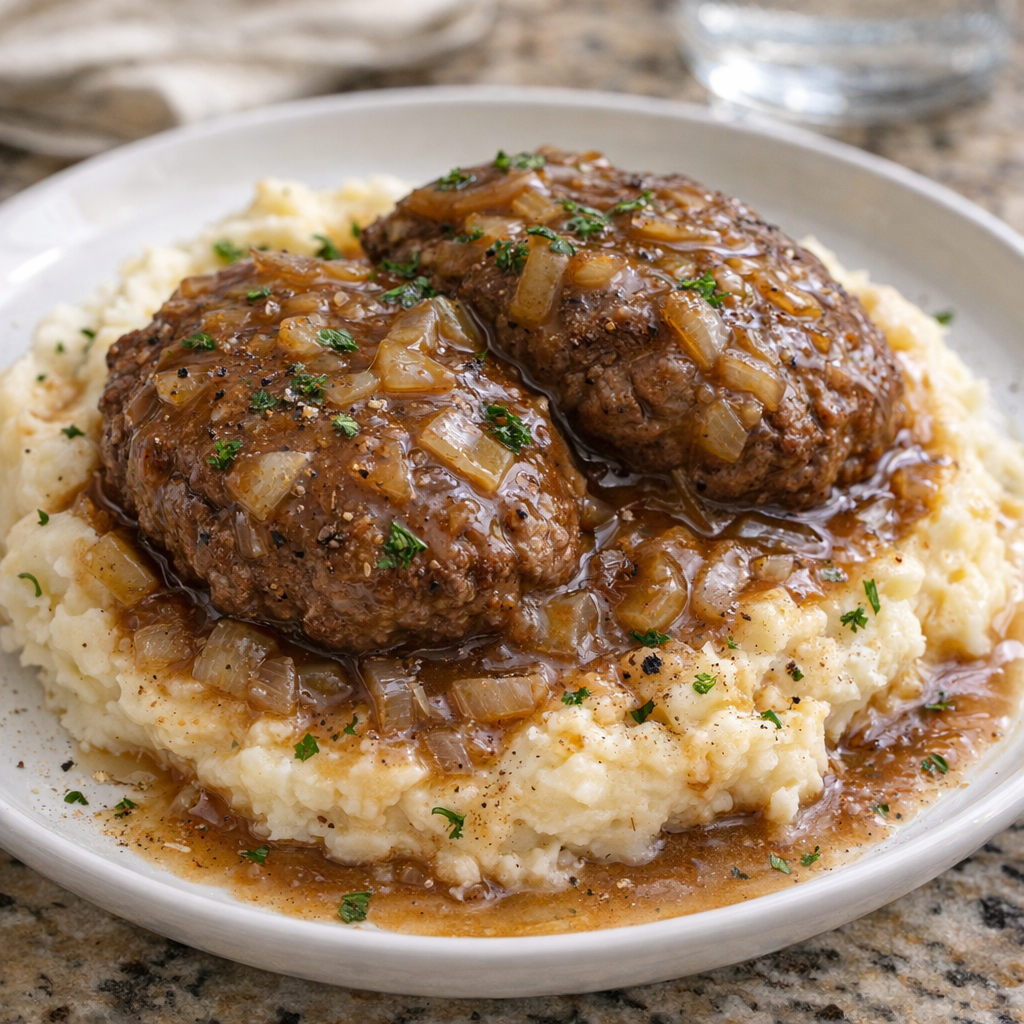
 This is my default slow cooker dinner for nights when I stare into the fridge and have zero plan: simple smothered hamburger steaks. You literally layer raw beef patties in the slow cooker, pour beef broth over the top with just three more pantry ingredients, and let it do its thing all afternoon.
Slow cooker hamburger steaks served over mashed potatoes

The broth and onions turn into a cozy, savory gravy that soaks into the meat and makes the whole house smell like Sunday dinner, even if it’s just a random Tuesday when you got home late from work.

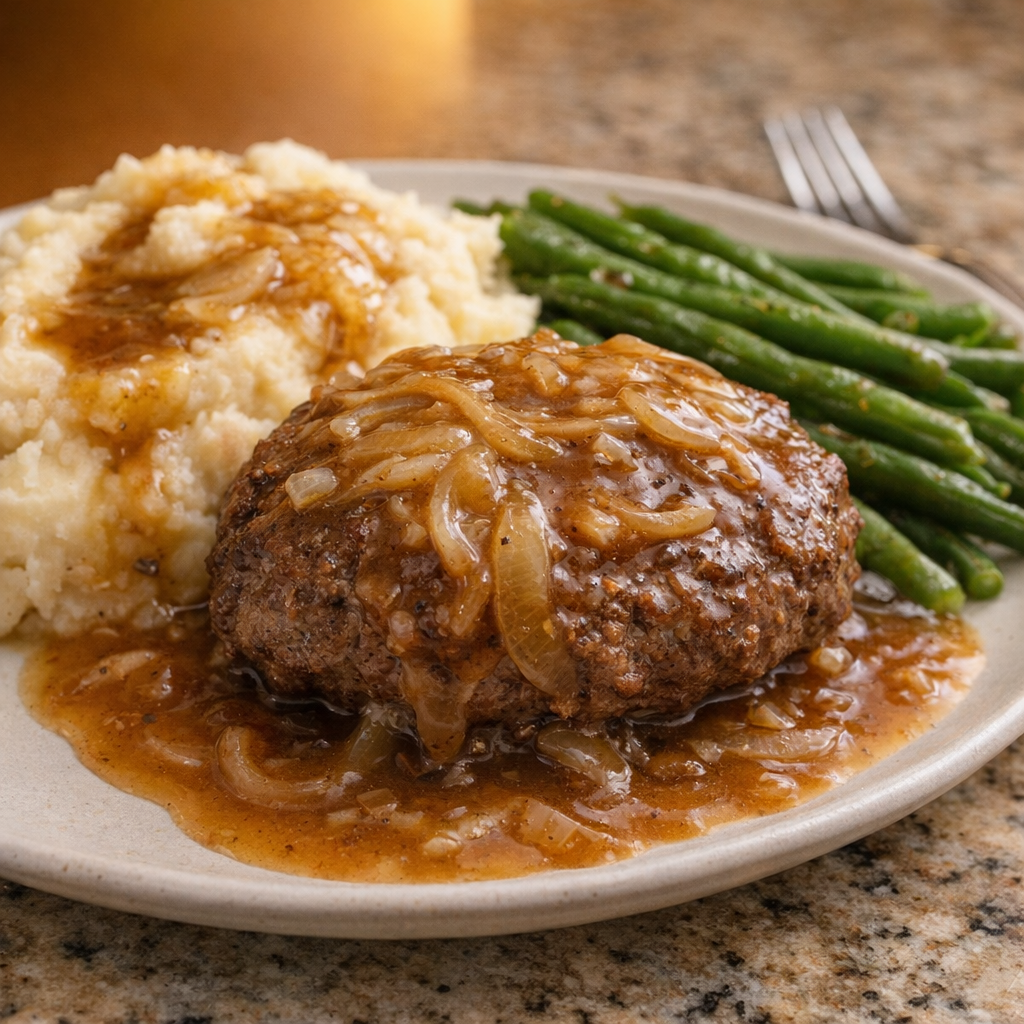
These smothered hamburger steaks are all about that rich, oniony gravy, so I love serving them over creamy mashed potatoes or buttered egg noodles to catch every drop. Rice works great too if that’s what you have on hand. Add a simple veggie like steamed green beans, roasted carrots, or a side salad to round things out without much extra effort.

Weeknight plate with hamburger steak, green beans, and gravy

Leftovers reheat nicely in a skillet with a splash of extra broth, so they’re perfect for meal-prep lunches the next day.

Slow Cooker Smothered Hamburger Steaks

Servings: 4

Ingredients
2 pounds ground beef (80/20 works best)
1 teaspoon kosher salt
1/2 teaspoon black pepper
1 large yellow onion, thinly sliced
2 cups beef broth
Directions

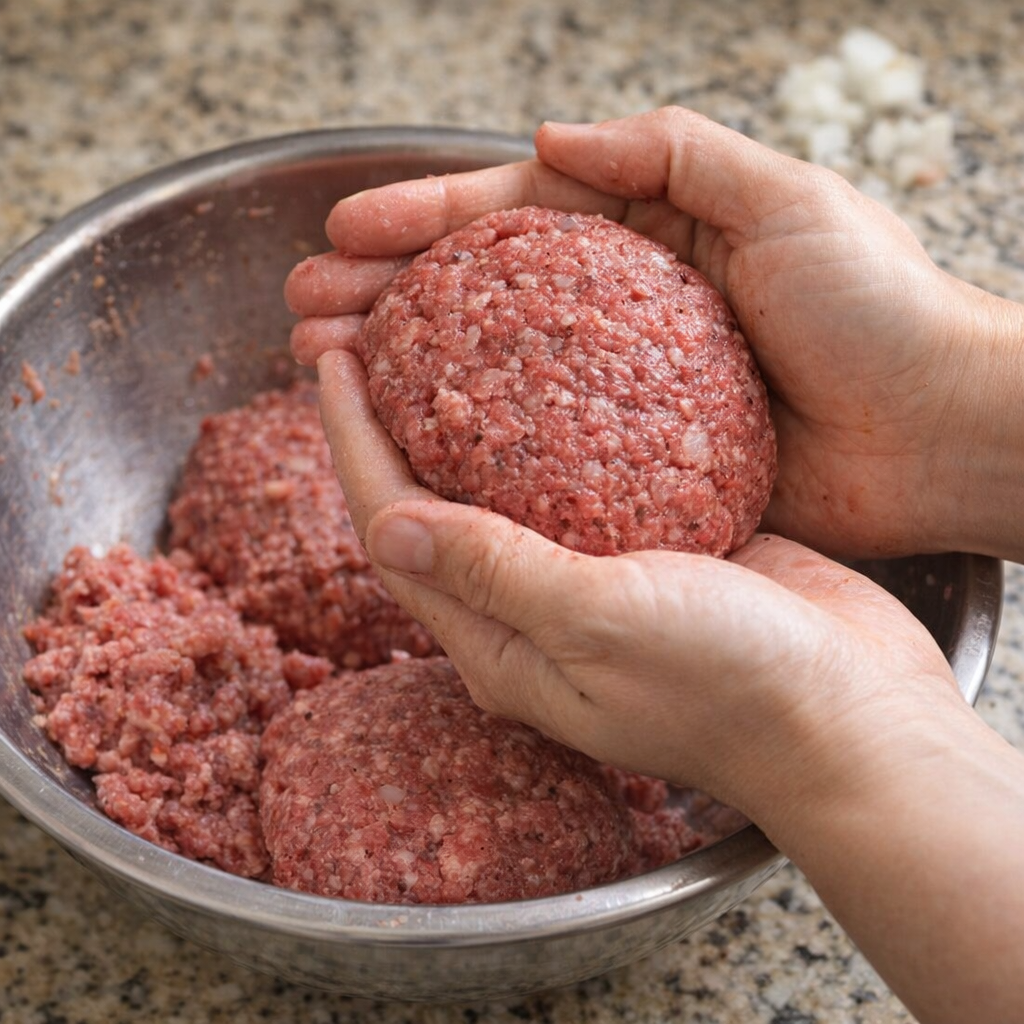
Form the patties: In a large bowl, gently mix the ground beef with the salt and pepper just until combined. Divide into 4–6 equal portions and shape into flat, even patties about 3/4 inch thick. Don’t overwork the meat so the patties stay tender.

Hands shaping raw beef patties in a mixing bowl

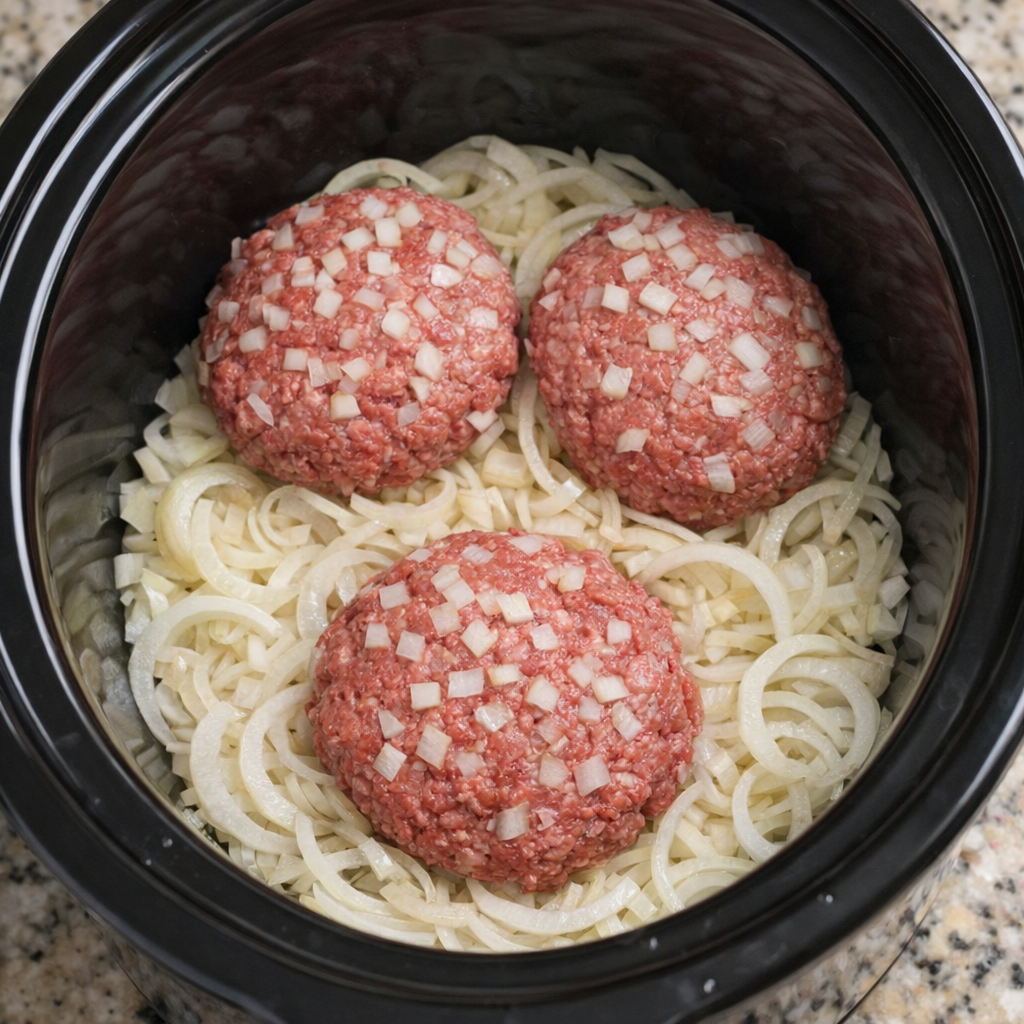
Layer in the slow cooker: Scatter the sliced onion evenly over the bottom of the slow cooker. This creates a bed for the patties and keeps them from sticking, while also flavoring the broth.

Add the raw patties: Place the raw beef patties directly on top of the sliced onions in a single layer. If you need to stack them slightly, it’s fine as long as they’re mostly in one even layer.

Raw hamburger patties layered over sliced onions in slow cooker

Pour in the beef broth: Slowly pour the beef broth over the raw beef patties and onions, making sure all the patties get some broth over them. You should see the liquid pooling around and partially over the meat, just like that classic slow cooker process shot on a speckled granite countertop.

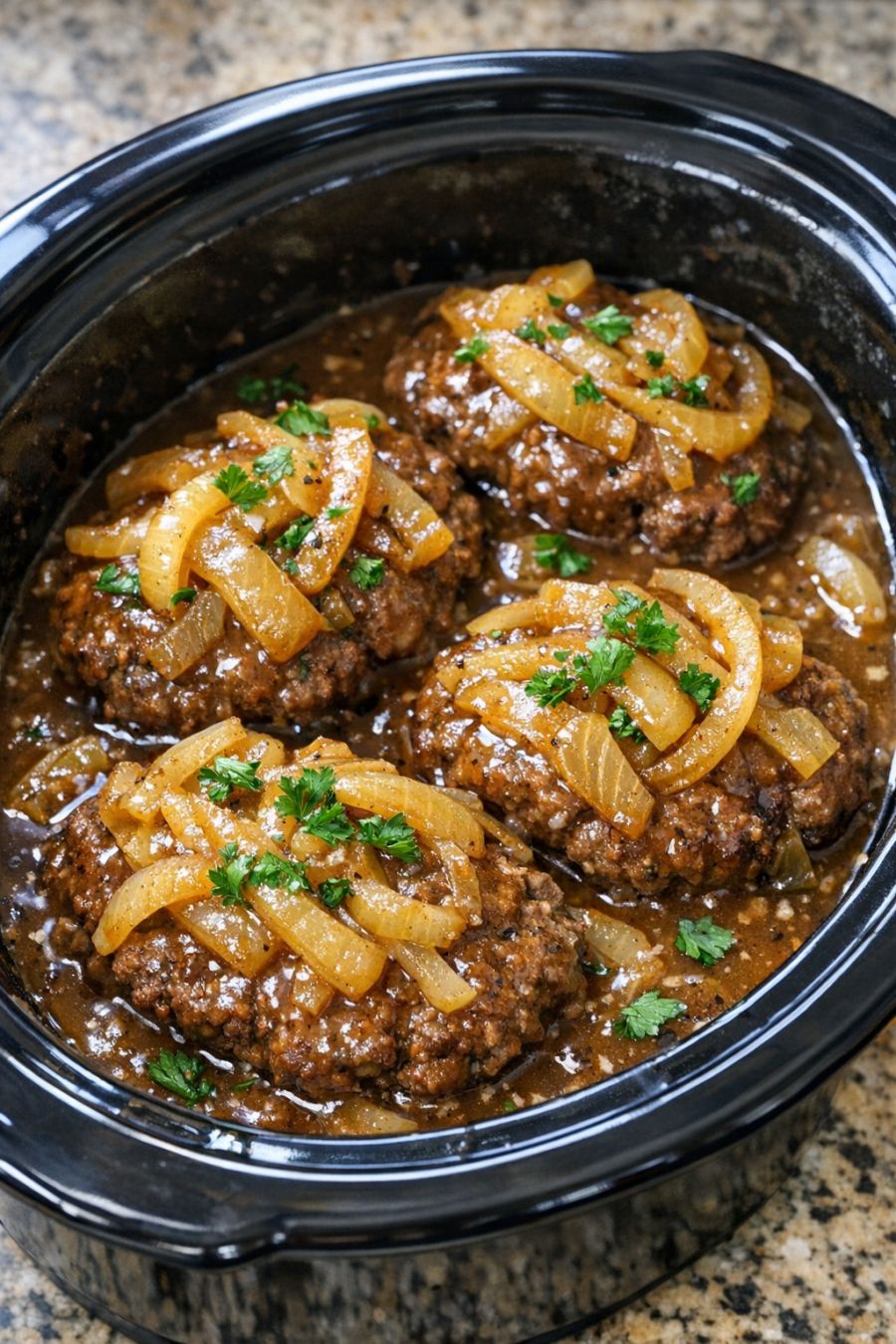
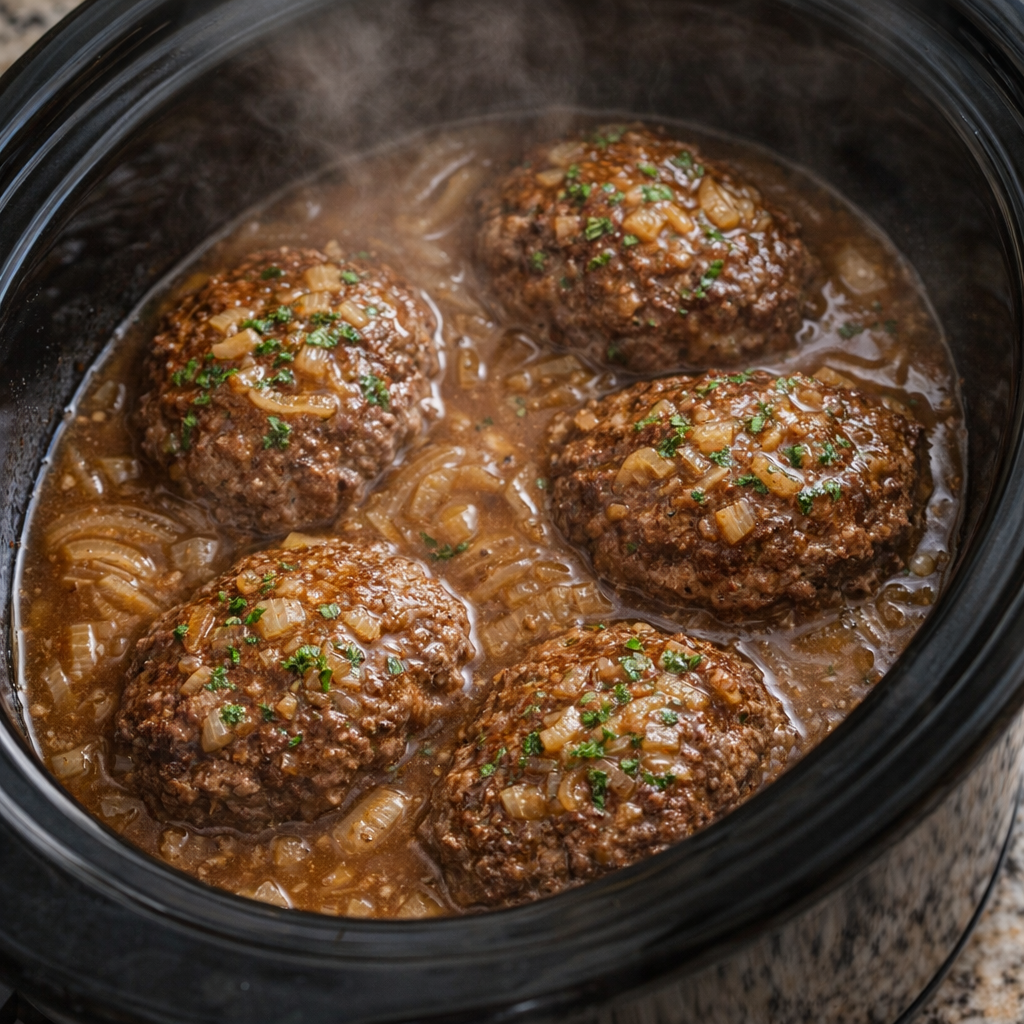
Cook low and slow: Cover the slow cooker with the lid and cook on LOW for 6–7 hours, or on HIGH for 3–4 hours, until the patties are cooked through (no pink in the center) and the onions are very soft. The broth will pick up flavor from the beef and onions and turn into a light, savory gravy.

Cooked hamburger steaks in onion gravy inside slow cooker

Serve: Carefully lift the smothered hamburger steaks out with a spatula, spoon some of the onions and broth over the top, and serve hot over mashed potatoes, noodles, or rice. Taste the broth and add a pinch more salt or pepper at the end if needed.

Variations & Tips

For a slightly thicker gravy, whisk 1–2 tablespoons of cornstarch with an equal amount of cold water, then stir it into the hot cooking liquid during the last 20–30 minutes on HIGH until it thickens. You can also swap the yellow onion for sweet onion if you like a milder, sweeter flavor.

Cornstarch slurry being whisked into gravy in the slow cooker

If you want to stretch this into more servings, make smaller patties and add an extra 1/2–1 cup of beef broth so everything stays nicely covered. For a bit more seasoning without extra ingredients, use freshly ground black pepper and a sprinkle of garlic powder if you have it on hand. Leftovers keep well in the fridge for up to 3 days; store the patties in their broth so they stay juicy, and reheat gently on the stove or in the microwave.

Pour beaten eggs over frozen hash browns, combined with 4 more additions, into slow cooker for a hearty morning feast that I crave week after week.

by


Pour beaten eggs over frozen hash browns, combined with 4 more additions, into slow cooker for a hearty morning feast that I crave week after week.

This slow cooker 6-ingredient Amish-style breakfast casserole is exactly the kind of cozy, no-fuss meal I lean on during busy weeks. It starts with a bag of frozen hash browns, then you simply pour beaten eggs over the top, along with four more everyday additions, and let the slow cooker do the rest. Amish casseroles are known for being hearty, simple, and family-friendly, and this one definitely fits that vibe.

I love tossing it together the night before after work, setting the slow cooker on low, and waking up to a warm, satisfying breakfast that feels like a weekend treat even on a regular weekday.

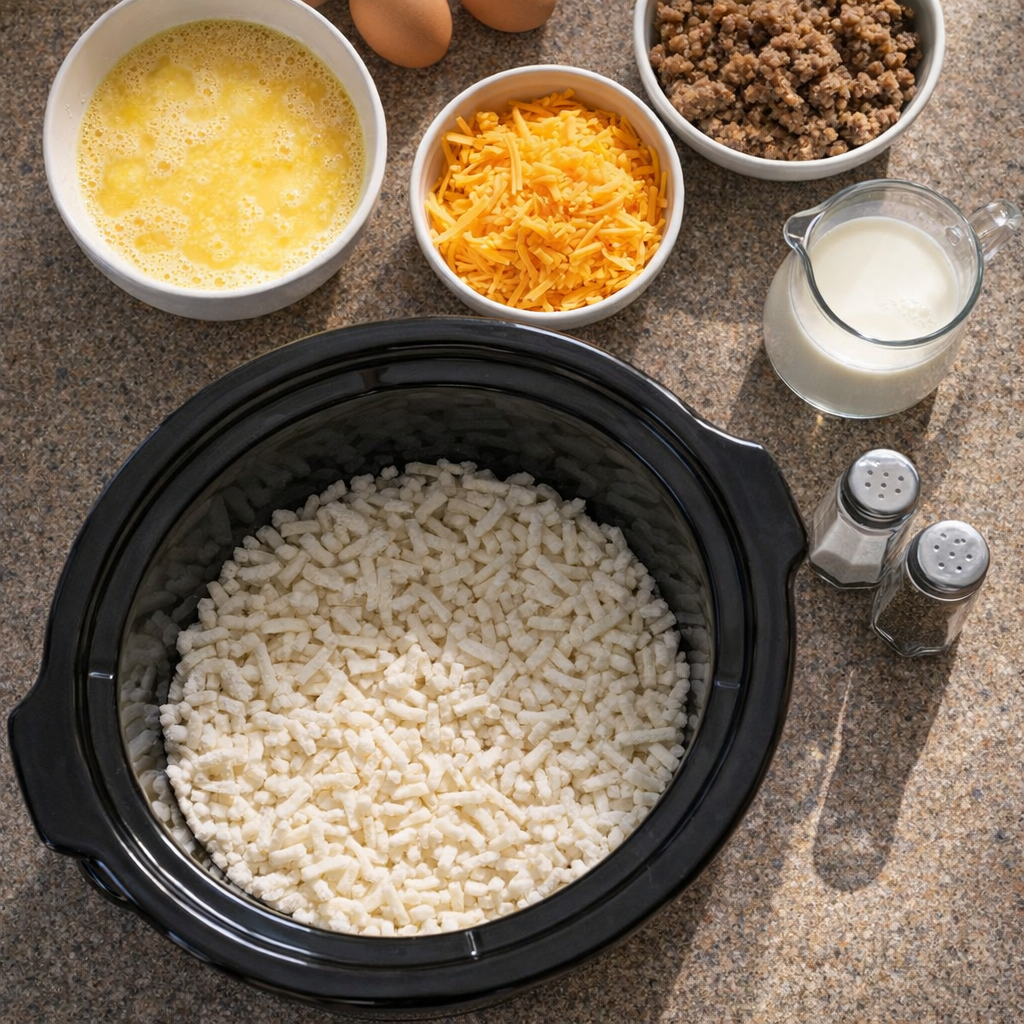
Slow cooker breakfast casserole ingredients on a kitchen counter

Serve this casserole straight from the slow cooker with a side of fresh fruit or a simple green salad if you’re leaning more brunch than breakfast. Toast or English muffins are great for scooping up any cheesy, eggy edges. If you’re feeding a crowd, set out toppings like salsa, hot sauce, sliced green onions, or a little sour cream so everyone can dress up their own bowl.

A pot of hot coffee or a pitcher of orange juice rounds it out into a full, no-stress morning feast.

Slow Cooker Amish Breakfast Casserole

Servings: 6

Ingredients
1 (30–32 oz) bag frozen shredded hash browns, unthawed
8 large eggs
1 cup whole milk (or 2%)
1 1/2 cups shredded cheddar cheese
8 oz breakfast sausage, cooked and crumbled (pork or turkey)
1 teaspoon kosher salt
1/2 teaspoon black pepper (optional, but recommended)
Nonstick cooking spray or a little butter for greasing the slow cooker
Directions
Grease the inside of a 5- to 6-quart slow cooker with nonstick cooking spray or rub it with a little butter to help prevent sticking.
Spread the frozen shredded hash browns evenly over the bottom of the slow cooker. Do not thaw them; they should go in frozen.
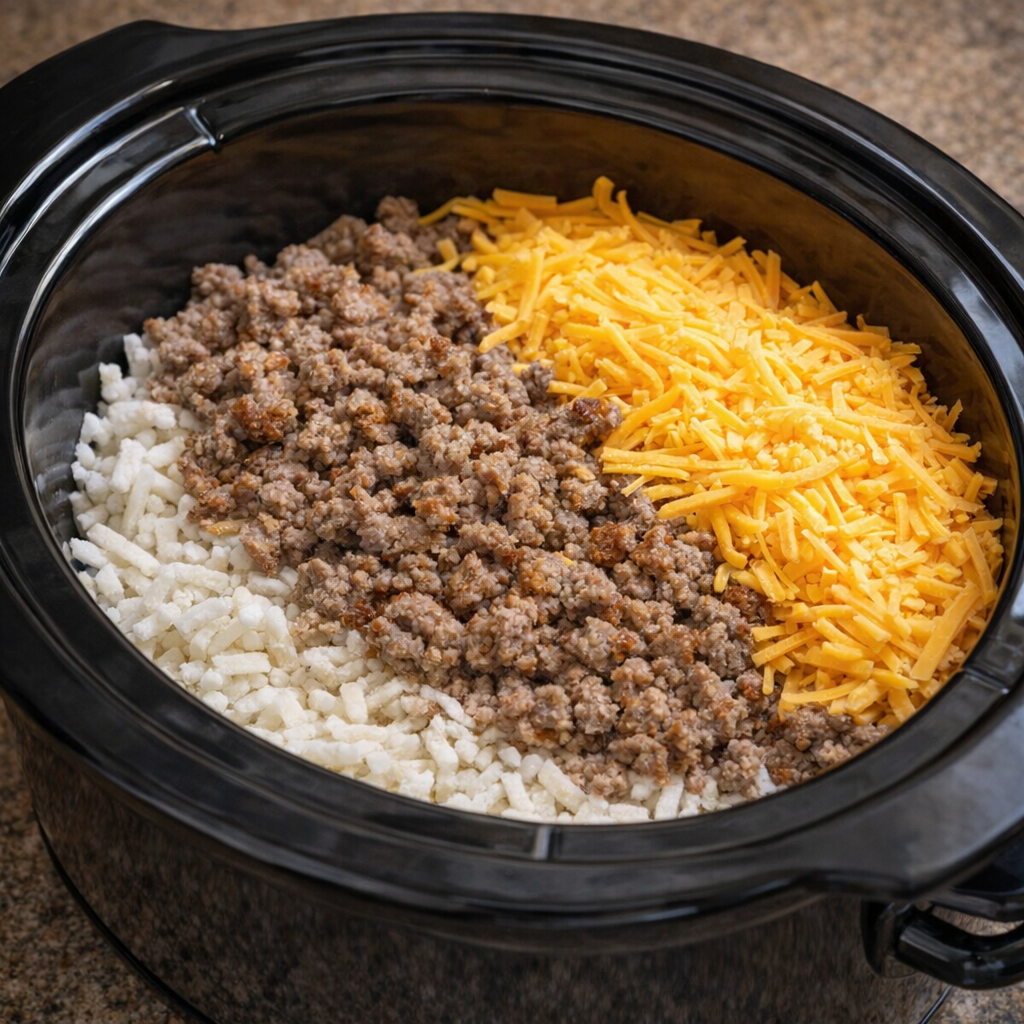
Sprinkle the cooked, crumbled breakfast sausage evenly over the frozen hash browns.
Sprinkle the shredded cheddar cheese over the sausage and hash browns, making an even layer.
Layered hash browns sausage and cheese in a slow cooker
In a medium bowl, whisk together the eggs, milk, kosher salt, and black pepper until the mixture is smooth and well combined.
Slowly pour the beaten egg mixture evenly over the frozen hash browns, sausage, and cheese in the slow cooker, making sure to cover as much of the surface as possible. This is the key step that brings everything together into a casserole.
Cover the slow cooker with the lid. Cook on LOW for 6–8 hours, or on HIGH for 3–4 hours, until the eggs are set in the center and the edges are lightly golden. Cooking times can vary by slow cooker, so start checking toward the earlier end of the range.
Cooked breakfast casserole in the slow cooker with a serving spoon
Once cooked, turn the slow cooker to WARM if you’re not serving right away. Let the casserole sit, covered, for about 10 minutes to firm up slightly before scooping into bowls.
Spoon the casserole into bowls and serve hot. Store any leftovers in an airtight container in the fridge for up to 3 days; reheat individual portions in the microwave for easy weekday breakfasts.
Variations & Tips

You can easily tweak this casserole to fit your family and what you have in the fridge. Swap the breakfast sausage for diced ham or cooked, crumbled bacon, or use a plant-based sausage if you prefer a meatless option. Change up the cheese with a blend of cheddar and mozzarella, pepper jack for a little kick, or whatever shredded cheese you need to use up.

Breakfast casserole served in a bowl with fruit on the side

If you want to sneak in more veggies, layer in 1–2 cups of finely chopped bell peppers, onions, or spinach on top of the hash browns before adding the sausage and cheese, just keep the total additions modest so the eggs still set well. For a lighter version, you can use half egg whites and half whole eggs and swap in turkey sausage and 1% milk; just know the texture will be a bit less rich.

To make this more “grab and go,” cook the casserole fully, chill it, then cut into squares and reheat pieces during the week. If your slow cooker runs hot and you’re worried about overcooking, line it with a slow cooker liner or parchment and start checking for doneness on the early side so the eggs stay tender instead of rubbery.


Grandma's Go-To: She always makes this cozy bowl when the weather is chilly. Just 4 ingredients for the ultimate comfort food

by


Grandma's Go-To: She always makes this cozy bowl when the weather is chilly. Just 4 ingredients for the ultimate comfort food


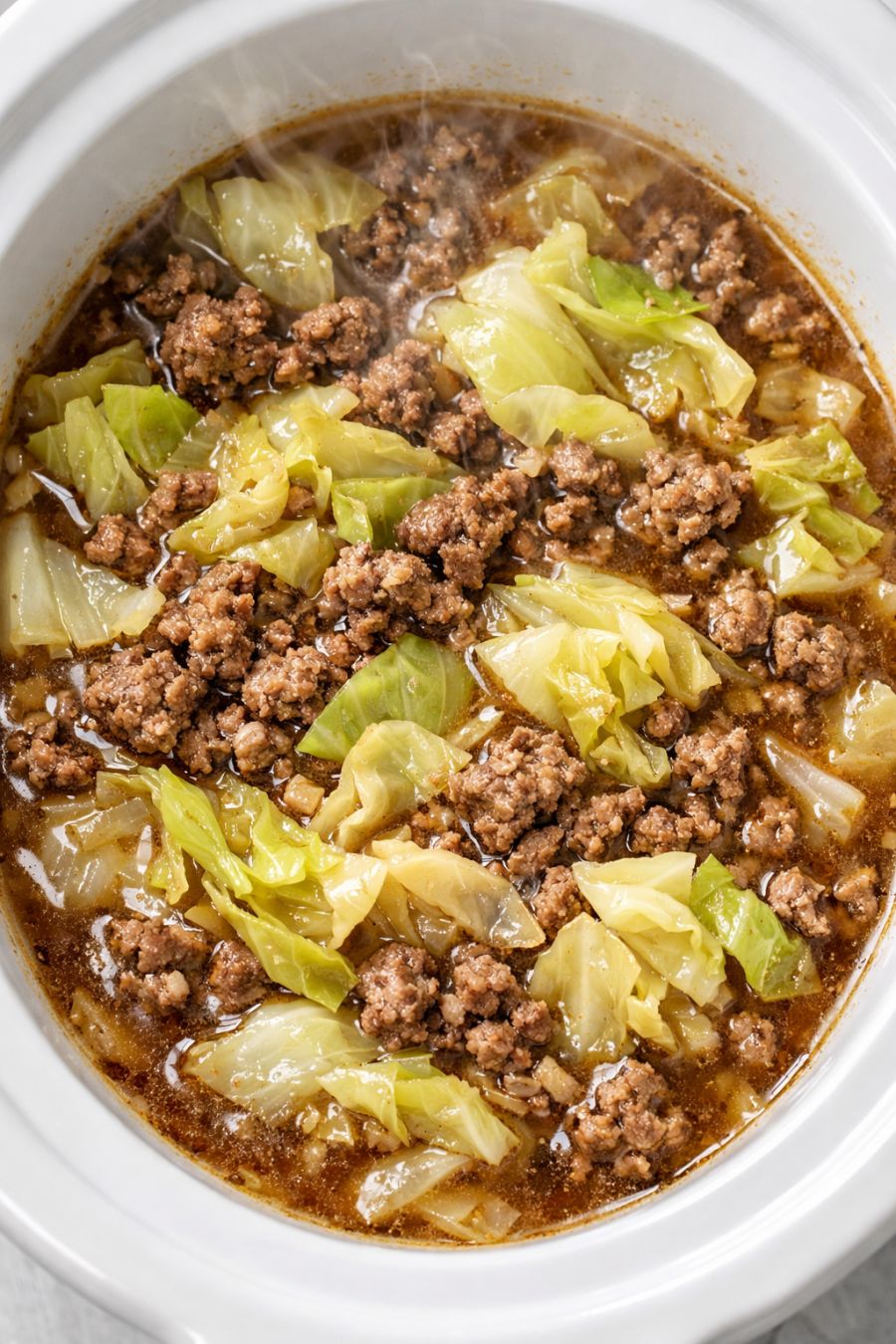
 This slow cooker 4-ingredient cabbage beef soup is exactly the kind of cozy bowl my Midwestern grandma would pull out when the wind turned sharp and everyone tracked in with cold cheeks. It leans on humble staples—ground beef, cabbage, onion soup mix, and broth—to create a deeply savory, old-fashioned comfort food with almost no effort. While versions of cabbage and beef soup show up in many European and American farmhouse kitchens, this particular approach feels very Midwestern: practical, budget-friendly, and built to simmer all day in the slow cooker while the house fills with that nostalgic, beefy aroma.

Serve this soup piping hot in deep bowls with plenty of broth, and pair it with something that can soak up all those juices: a slice of crusty bread, buttered rye, or even a soft dinner roll. A simple green salad with a tangy vinaigrette balances the richness nicely. If you’d like to stretch it into a heartier meal, spoon the soup over a scoop of cooked rice, barley, or mashed potatoes. A sprinkle of black pepper at the table and a small dish of pickles or sauerkraut on the side echo the old-world, cabbage-and-beef roots of the dish.
Slow Cooker Cabbage Beef Soup
Servings: 6
Ingredients
1 1/2 pounds ground beef (80–90% lean)
1 medium head green cabbage (about 2 to 2 1/2 pounds), cored and thinly sliced
2 (10.5-ounce) cans condensed beef broth OR 4 cups regular beef broth
1 (1-ounce) packet dry onion soup mix
Directions
Brown the beef: In a large skillet over medium-high heat, cook the ground beef, breaking it into small crumbles with a spoon as it browns. Cook until no pink remains and the meat is nicely browned, 7–10 minutes. If there is a lot of fat in the pan, spoon off most of it, leaving a couple of teaspoons for flavor.
Prep the cabbage: While the beef browns, remove any tough or damaged outer leaves from the cabbage. Cut the cabbage into quarters, remove the core, then slice into thin ribbons about 1/4 inch wide. This helps the cabbage become tender and almost silky in the broth.
Layer in the slow cooker: Add the sliced cabbage to the slow cooker crock. Scatter the dry onion soup mix evenly over the cabbage so it can season the vegetables as they cook. Add the browned beef on top, along with any browned bits from the pan.
Add the broth: Pour the beef broth over everything in the slow cooker. Use the back of a spoon to gently press down the ingredients so they’re mostly submerged in liquid. The cabbage will wilt as it cooks and release additional moisture, creating a rich, savory brown broth.
Cook low and slow: Cover the slow cooker and cook on LOW for 6–8 hours, or on HIGH for 3–4 hours, until the cabbage is very tender and translucent and the flavors have melded. The soup should look like soft ribbons of pale green cabbage and browned beef crumbles floating in a steamy, beefy broth.
Taste and adjust: Give the soup a good stir. Taste and, if needed, adjust with a pinch of salt or a grind of black pepper to your liking (the onion soup mix and broth are usually salty enough, so taste before adding more). Ladle into warm bowls and serve immediately while steaming hot.
Variations & Tips
Because this recipe is built on just four core ingredients, small tweaks can have a big impact. If you prefer a leaner bowl, use 93% lean ground beef or even ground turkey, but keep in mind that a little fat adds flavor and that classic “Grandma’s kitchen” richness. For a slightly sweeter profile, stir in a handful of shredded carrot along with the cabbage—this keeps you close to the spirit of the dish while adding natural sweetness. If you want a more tomato-forward version, replace 1 cup of the beef broth with canned tomato sauce or crushed tomatoes, which will give you a Midwest-style nod to stuffed cabbage rolls. To stretch the soup for a crowd, add a drained can of white beans or kidney beans during the last hour of cooking; they’ll absorb the broth and become creamy. You can also play with texture by serving the soup over cooked egg noodles, rice, or barley instead of adding more ingredients directly to the pot. Finally, if sodium is a concern, choose low-sodium beef broth and a reduced-sodium onion soup mix, then season to taste at the end so you retain all the comfort without overwhelming saltiness.

What Happens When Your Body Does Not Get Enough Hydration

by


What Happens When Your Body Does Not Get Enough Hydration


 Most people understand that drinking water is important, yet hydration is often overlooked amid busy routines. Long work hours, frequent caffeine intake, and reliance on sweetened or flavored drinks can quietly reduce daily water consumption. Because water supports nearly every system in the body, even mild dehydration can affect how we feel and function. When fluid intake drops too low, the body often sends subtle signals that are easy to miss or dismiss.

Water is essential for digestion, circulation, temperature regulation, and the removal of waste. It also supports joint movement, nutrient delivery, and cellular health. Many people wait until they feel thirsty before drinking, but thirst usually appears after the body has already begun to experience fluid imbalance. Maintaining steady hydration throughout the day helps the body function efficiently and reduces unnecessary strain.

One of the clearest indicators of hydration is urine color. Pale or light yellow urine typically suggests adequate hydration, while darker shades may signal the need for more fluids. Other early signs can include fatigue, reduced concentration, and fewer bathroom visits. In some cases, dehydration may feel similar to hunger, leading people to eat when the body is actually asking for water. Pausing to drink a glass of water before reaching for food can help clarify the body’s needs.

Low hydration levels can also influence physical comfort and appearance. Dry skin, dull complexion, and recurring headaches are common signs that fluid intake may be insufficient. The brain is particularly sensitive to hydration, and even minor shortages can affect focus, mood, and mental clarity. Developing a consistent habit of drinking water throughout the day can support stable energy, clearer thinking, and overall balance.

Staying hydrated does not require drastic changes—just regular attention. Simple practices, such as keeping water nearby and sipping consistently, can make a meaningful difference in daily comfort and long-term well-being.

NEVER Store These Items Under the Kitchen Sink!

by

NEVER Store These Items Under the Kitchen Sink!


NEVER Store These Items Under the Kitchen Sink!

Many people treat the space under their kitchen sink as a convenient storage spot. After all, it’s hidden and easily accessible. But did you know that storing certain items there can be dangerous or ruin them? Here’s what you need to know.

1. Cleaning Products and Food Together

It’s tempting to keep cleaning sprays, detergents, and other chemicals under the sink alongside your food items or snacks. Big mistake!

  • Many cleaning products contain toxic chemicals.

  • Even a small leak or spill can contaminate your food, posing a serious health risk.

2. Sharp Objects

Knives, scissors, and other sharp tools might be tucked under the sink “temporarily,” but this is unsafe.

  • Moisture under the sink can cause rust, weakening metal blades.

  • Reaching blindly into a cluttered cabinet increases the risk of cuts or injury.

3. Paper Towels, Napkins, and Cardboard

Paper items are extremely susceptible to moisture and mold.

  • The area under the sink is often damp.

  • Storing paper products here can cause mold growth, bad odors, and even attract pests.

4. Electrical Appliances


4. Electrical Appliances

Never store small kitchen appliances like blenders or coffee makers under the sink.

  • Water leaks can damage electronics.

  • Moisture plus electricity is a serious safety hazard.

5. Plastic Containers Not Made for Heat or Moisture

Even if they seem safe, storing some plastics under a moist cabinet can lead to warping, cracking, or chemical leaching over time.


✅ Safe Alternatives for Under-Sink Storage

  • Cleaning products only: Keep all cleaning chemicals together in a secure container, away from children and pets.

  • Trash bags or sponges: Store items that can tolerate moisture.

  • Install organizers or racks: Elevate items above any potential leaks to keep them dry.


Conclusion

The space under your kitchen sink may be convenient, but not everything belongs there. Storing hazardous or sensitive items can put your health, safety, and belongings at risk. Take a minute to reorganize, and you’ll protect your home—and your family—from unnecessary dangers.

House Republicans Reject Senate Bill That Doesn’t Fully Fund ICE

by


House Republicans Reject Senate Bill That Doesn’t Fully Fund ICE


 In a 213-203 vote, House Republicans on Friday rejected a bipartisan Department of Homeland Security funding deal passed by the Senate and instead approved their own measure, extending a shutdown that has now reached 42 days. Lawmakers then left Washington for a two-week recess, leaving no immediate path to resolve the standoff.

Speaker Mike Johnson and House Republicans advanced a plan to fund DHS for eight weeks, including money for border enforcement that was excluded from the Senate bill. The move effectively blocks the Senate proposal and prolongs the shutdown, CNN reported.

The Senate measure, backed by both parties, would fund most of the department but does not include funding for immigration enforcement agencies. That omission became a key point of contention for House Republicans and President Donald Trump.

Republicans said the Senate should return from recess to take up the House bill. Trump has also moved to fund Transportation Security Administration workers through executive action during the shutdown.

The decision marks a sharp break between House and Senate Republicans, with Johnson directly challenging Senate Majority Leader John Thune. House GOP leaders said they were not part of the negotiations that produced the Senate agreement.

“This gambit that was done last night is a joke,” Johnson said, while placing blame on Senate Democrats. He later said he spoke with Thune before the House rejected the bill.

“I told him, it shouldn’t be a surprise to anybody that we would not be able to do that,” Johnson said. “We’re not going to split apart two of the most important agencies in the government and leave them hanging like that. We just couldn’t do it.”

House Republican leaders said they believe Trump supports their approach. Privately, some GOP lawmakers acknowledged the strategy could carry political risks, with no clear path to force Senate Democrats to accept the House version.

House Majority Whip Tom Emmer said frustration within the conference drove the decision to reject the Senate bill. “There is a common disgust from our leadership team and from our members about what they did over in the Senate,” Emmer said.

Johnson said he does not blame Thune directly and pointed instead to Senate Minority Leader Chuck Schumer for shaping the legislation. Senate Republicans, however, were involved in drafting the bill, which passed early Friday without a roll call vote.

By Friday afternoon, Trump publicly criticized the Senate measure. “You can’t have a bill that’s not going to fund ICE. You can’t have a bill that’s not going to fund any form of law enforcement,” Trump said in an interview with Fox News.

Members of the House Freedom Caucus also opposed the Senate bill and called for additional provisions, including funding for border enforcement and voter ID measures. Rep. Andy Harris said any acceptable bill must include those priorities.

“The only thing we’re going to support is adding that funding into the bill, adding voter ID, sending it back to the Senate,” Harris said.

Some Republicans acknowledged concerns about the ongoing shutdown’s impact on travel and government operations. Rep. Jeff Van Drew said lawmakers must act to reopen the department.

“I mean, we’ve got to, for God’s sake, we’ve got to open this piece of government up,” Van Drew said.

Rep. Frank Lucas said the process is often slow and difficult. “We do it the hardest, most painful, most awkward, most drawn out miserable way, but eventually we get it done,” Lucas said.

House Democrats backed the Senate bill and argued it could pass immediately if brought forward. House Minority Leader Hakeem Jeffries said the bipartisan measure remains the best path forward.

“Our position remains the same. There is a bipartisan bill that every single senator, Democrats and Republicans, supported, that has the votes to pass today,” Jeffries said.